
TL;DR
A private iOS garage-access app that reverse-engineers a web frontend to provide native 1-tap access via Siri, CarPlay, and Home Screen widgets.
The Problem with Web-Only Access
Parking at my local garage (Stakspace) was a five-step chore. Because they didn't have a native app, everything ran through a web portal.
To open the gate, I had to:
- Unlock my phone and open Safari.
- Navigate to the parking URL.
- Pass a 2FA SMS check.
- Re-enter my payment info.
- Wait for the UI to load before tapping the button.
Doing this while pulling up to a line of cars wasn't just annoying, it was distracting and dangerous. I wanted to turn this entire flow into a single tap.
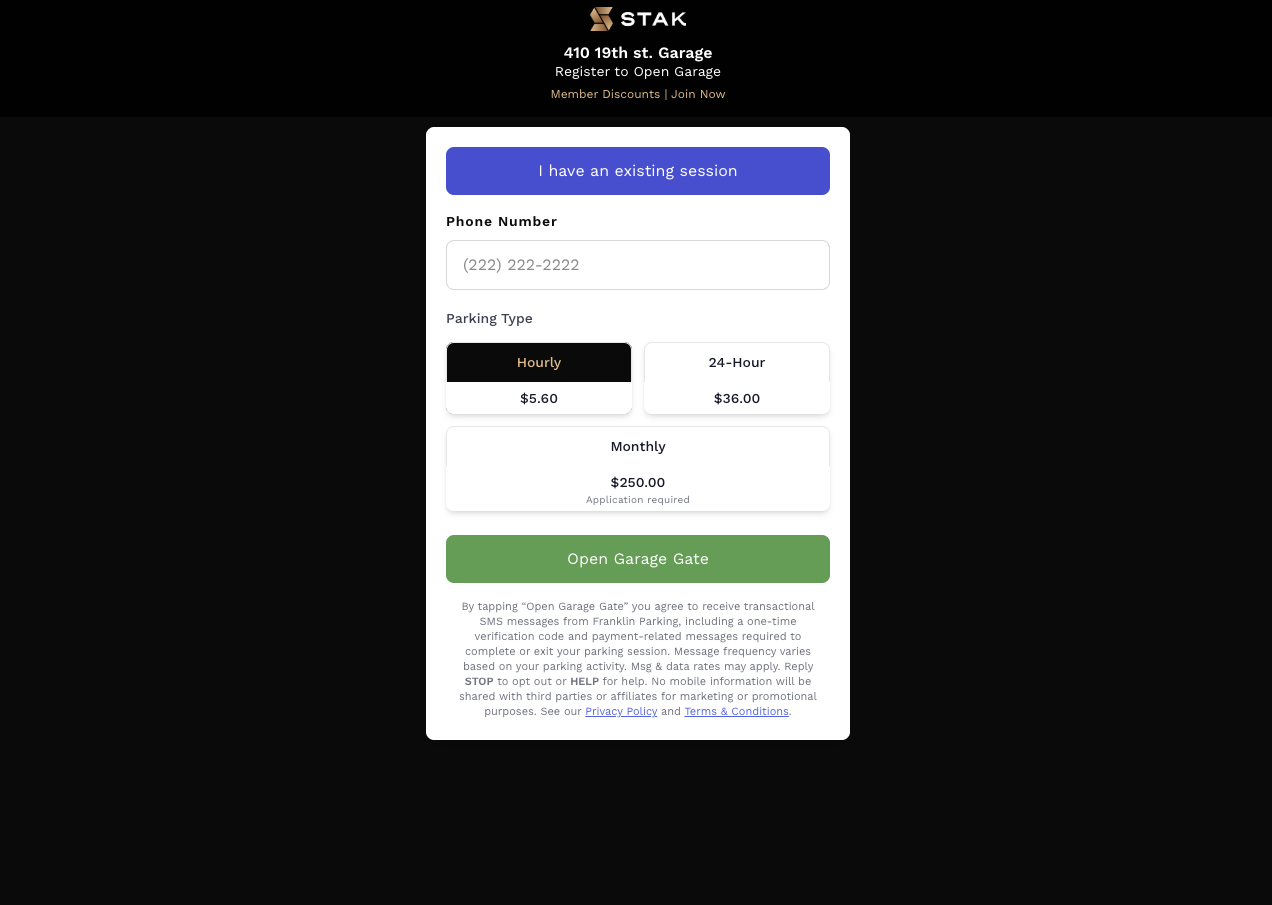
The multi-step web browser flow required to open the garage door.
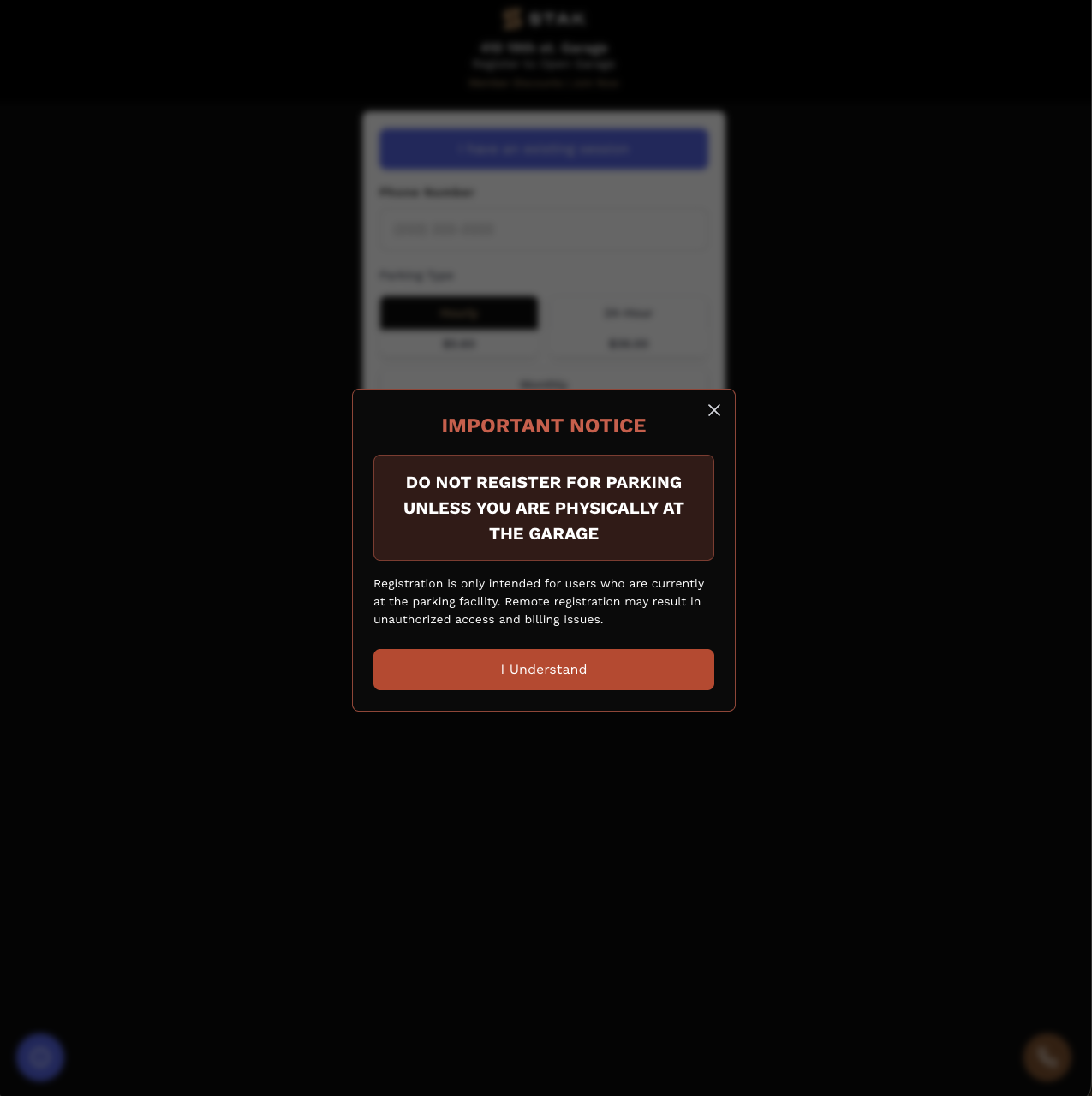
The web portal's strict location warnings.
Bypassing the Browser
To fix this, I built ShortStak, a native iOS app that completely bypasses the facility's web frontend. By reverse-engineering their backend, I was able to move the access controls exactly where I needed them while driving.
Instead of fumbling with a browser, I can now open the garage through:
- CarPlay: A button right on the dashboard.
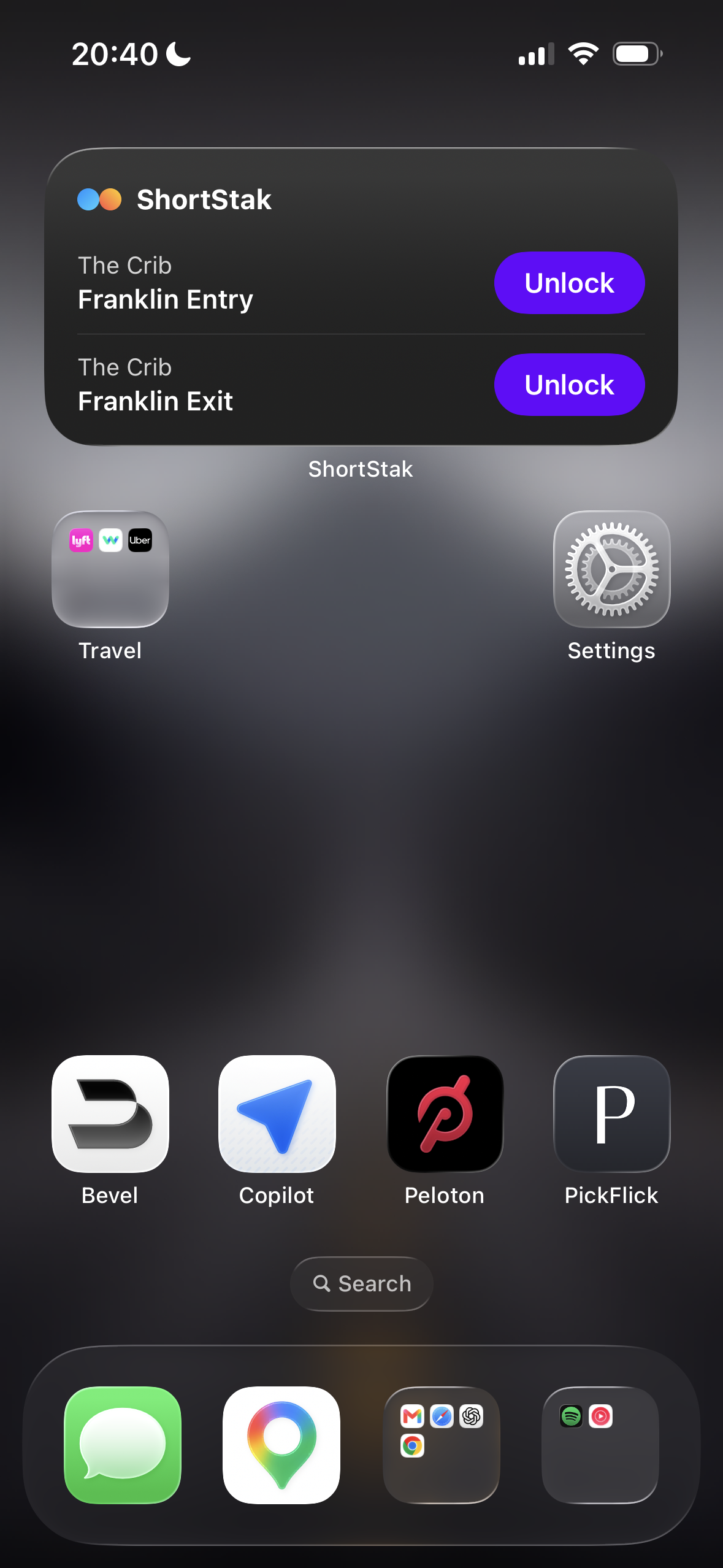
- Widgets: A quick tap from my iPhone's home screen.
- Siri: Hands-free voice commands ("Hey Siri, open the Franklin Street Entrance").
- Native iOS App: An interface with swipe-to-unlock sliders to prevent accidental taps.
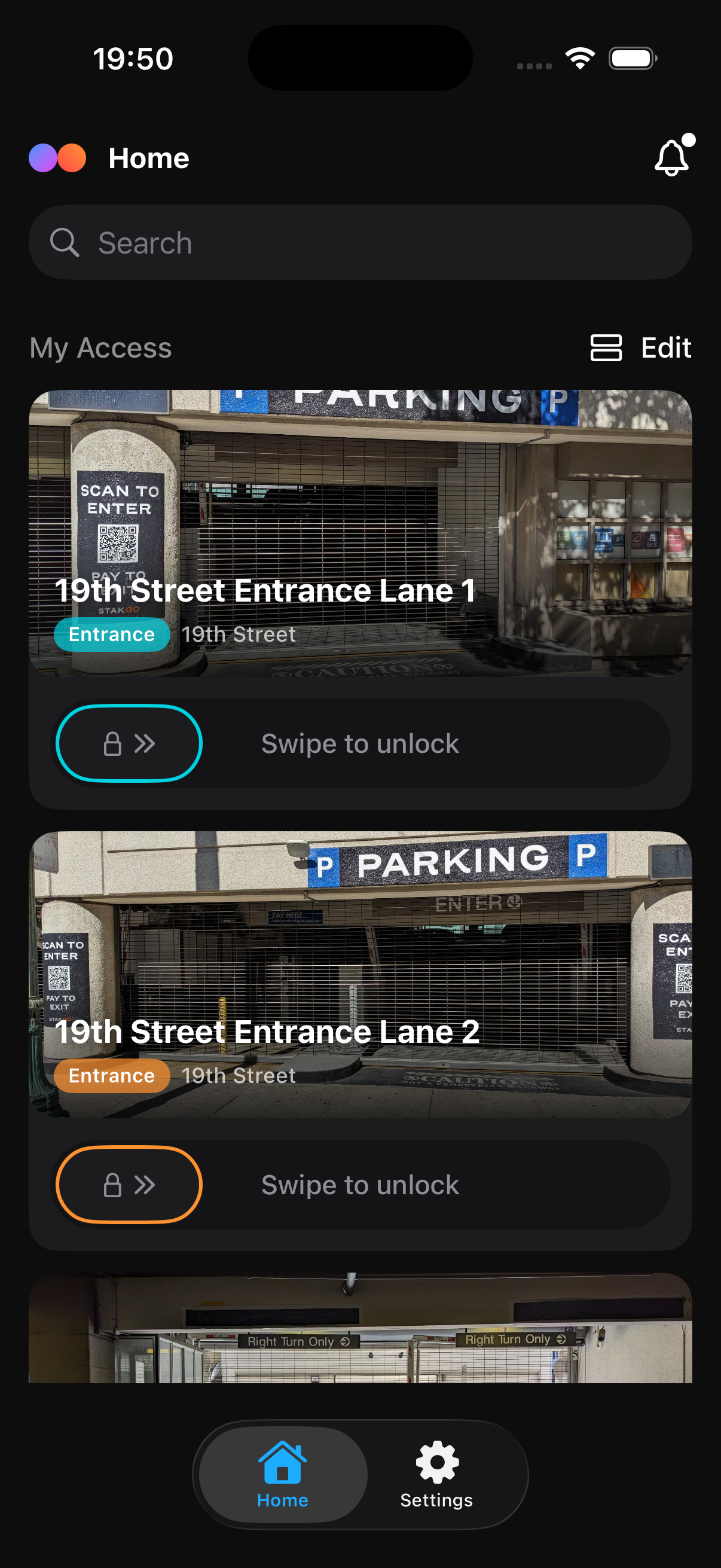
ShortStak provides native iOS integration via CarPlay, Widgets, and Siri.
Reverse Engineering a Closed System
The hard part wasn't the UI; it was getting a closed system to talk to my app. To trigger the POST /api/door endpoint, ShortStak had to perfectly mimic a desktop Chrome browser. I wrote logic to spoof user-agent strings, manage Stripe session cookies, and randomize X-Forwarded-For headers to get around their rate limits.
Parsing Minified JavaScript
Another major hurdle: the garage didn't have an API for its door list. The data was hardcoded directly into their compiled Next.js bundles.
To keep the app from breaking every time they updated their site, I wrote a live-refresh pipeline. The app dynamically downloads the site's live HTML, uses Regex to find the current Next.js chunk, downloads that specific JavaScript file, and extracts the door catalog directly from the minified code.
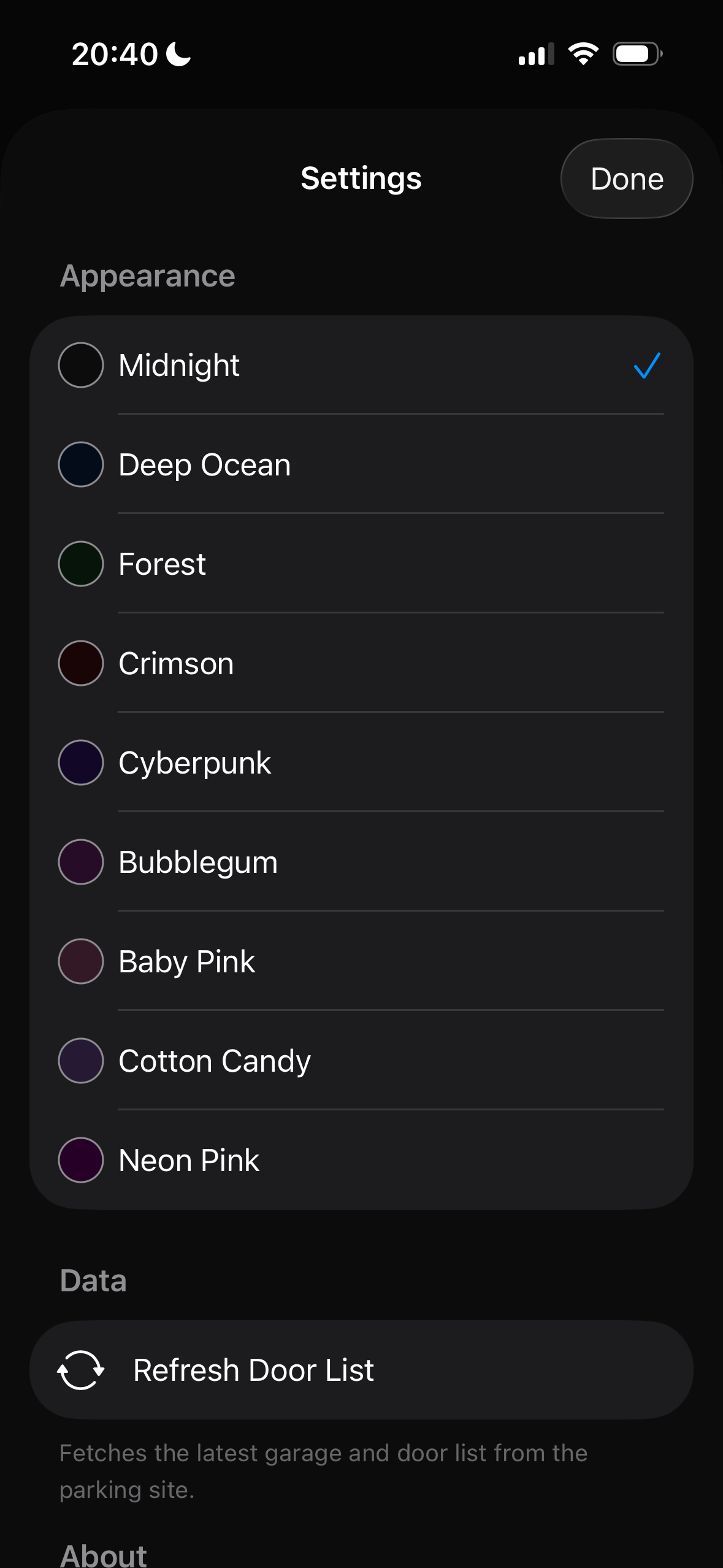
Extracting the door catalog by parsing minified Next.js bundles with Regex.
Adapting to New Security Guards
In August 2026, Stakspace cracked down. The exit gates started requiring a server-verified 'paid' session ID, blocking my requests with a 403 Forbidden.
Instead of reverting back to the manual web flow, I dug deeper into their network requests. I mapped out hidden endpoints like /api/parking and /api/stripe/charge-saved. Now, ShortStak quietly provisions a session and charges my card on file a split second before triggering the gate. The frontend UX didn't change at all: it's still just one tap.
Making Infrastructure Invisible
By abstracting away the messy scraping and authentication, I was able to build a clean, reliable iOS experience. A single DoorProvider manages the state across the main app, the CarPlay CPListTemplate, and the AppIntents driving the iOS widgets.
Ultimately, ShortStak took a heavily guarded, multi-step web portal and turned it into an invisible piece of infrastructure. It’s a great example of how pushing through technical constraints can completely transform a frustrating daily routine.
Screenshots
The main interface for ShortStak.
Using the app to access Stakspace.
Checking the garage locations.
Category
My Role
Collaborators
Solo Project